5 steps to trade meme coins like a pro without losing your stack
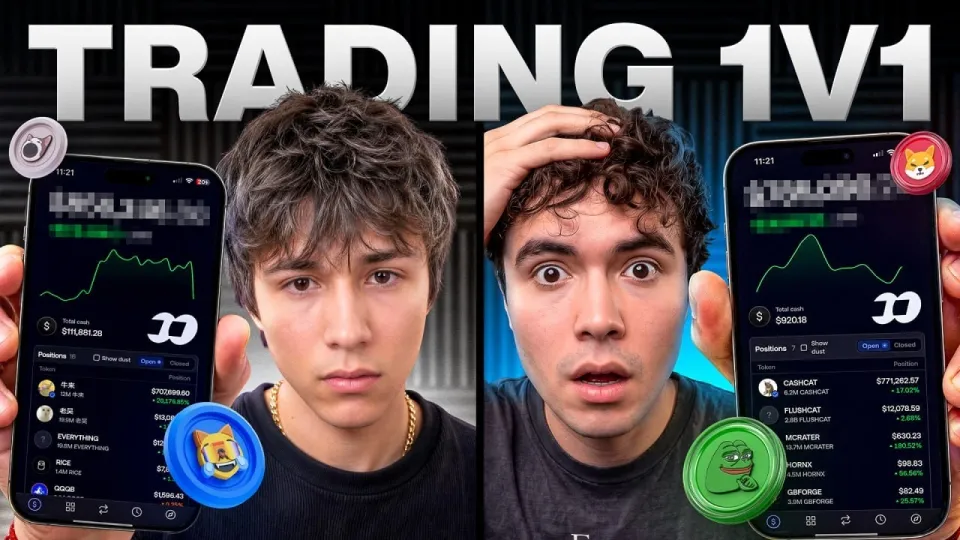
Video: I Challenged A Pro Memecoin Trader (Who Won?)
Need articles like this for your video? They help promote it on YouTube and Google — order them in the Telegram bot @sat_sit_bot. Articles with your video embedded are written and posted by the bot itself — on popular topical sites (no ads). Try it free: 50 articles on us.
· based on the channel insentos
Key takeaways
- Meme coin trading is high-risk speculation: most tokens lose value, so only trade what you can afford to lose.
- A pro trader in a live challenge stressed checking contract safety, holder distribution, and liquidity before buying.
- Use tools like Axiom for charting and FOMO for community insights to speed up research.
- Risk management rules: set a stop-loss, size positions small, and avoid chasing pumps.
- New traders should start with small amounts and focus on process, not profits.
Meme coin trading is the art of speculating on highly volatile, community-driven cryptocurrencies, and the key to doing it well is treating it as a disciplined process rather than a lottery. In a live challenge, a professional meme coin trader demonstrated that success comes from strict risk management, quick research, and emotional control—not from luck. You can start by signing up on FOMO, a platform that aggregates meme coin insights and community signals.
What makes meme coin trading different from other crypto
Meme coins are cryptocurrencies with no intrinsic value or utility, driven purely by hype and community sentiment. Unlike Bitcoin or Ethereum, which have established use cases and institutional backing, meme coins can explode in price within hours and crash just as fast. This extreme volatility creates opportunities for quick profits but also massive risks. In the live challenge, the pro trader emphasized that meme coins are a zero-sum game where most participants lose money. The key difference is that fundamentals are almost nonexistent—you're trading psychology and momentum. Tools like Axiom provide advanced charting and on-chain data to help you make informed decisions.
How to research a meme coin before buying
Before buying any meme coin, you must verify its contract safety, holder distribution, and liquidity. The pro trader in the video followed a checklist: first, check if the contract is renounced and has no mint function; second, scan the holder list for whales who could dump on you; third, confirm that liquidity is locked or burned. He also looked at social metrics—Twitter mentions, Telegram activity—to gauge community interest. Scam tokens often have fake volume and paid trends. Using tools like Axiom, you can quickly filter out rugs. Always remember: if you can't explain why a token will go up, don't buy it.
Risk management rules every meme coin trader should follow
Risk management is the difference between surviving and blowing up your account. The pro trader used a strict set of rules: never risk more than 1-2% of your portfolio on a single trade, set a stop-loss at -20% to -30%, and take profits in tranches as the price rises. He also avoided using leverage, which amplifies losses in volatile markets. Another key rule: don't chase pumps—if you missed the entry, wait for a pullback. Emotional control is crucial; fear of missing out (FOMO) leads to buying at the top. Many beginners in the comments admitted to losing money by ignoring these principles. Start small and treat every trade as a learning experience.
Why community and tools matter for meme coin success
Community sentiment drives meme coin prices, so monitoring social channels is essential. The pro trader checked Telegram and Discord groups for early signals and used FOMO to aggregate community trends. However, he warned that most groups are echo chambers—you need to filter noise and verify information independently. Tools like Axiom offer real-time data on volume, holders, and price action. The guest in the video also stressed that trading in a call with others can help you stay accountable and learn from peers. But ultimately, you are responsible for your own research. Building a network of trusted traders can give you an edge, but never blindly follow calls.
Common questions from new meme coin traders
New traders often ask: how much money do I need to start? The answer is: start with an amount you can afford to lose completely—$50 to $100 is enough to learn the mechanics. Another common question: how do I spot a scam? Look for unlocked liquidity, a high concentration of holders, and anonymous teams with no track record. Also, be wary of tokens that pump immediately after launch—they often dump just as fast. The pro trader in the challenge emphasized that patience is key; wait for a clear setup rather than jumping on every new coin. Finally, many wonder if they can do this full-time: only after consistent profits and a proven strategy.
Useful links
- FOMO — meme coin insights and community signals
- Axiom — advanced trading terminal and charting
- insentos on X
- insentos on Instagram
- insentos on TikTok
Final thoughts
Meme coin trading is not a get-rich-quick scheme; it requires discipline, research, and risk management. The live challenge on the insentos channel showed that even a pro trader focuses on process over profits. By following the five steps outlined—understanding the market, researching tokens, managing risk, leveraging tools, and learning from the community—you can improve your odds. Remember to start small and never invest more than you can afford to lose. For more insights and tools, sign up on FOMO and join the community.
Questions & answers
How much money do I need to start trading meme coins?
You can start with as little as $50 to $100. The key is to use an amount you are prepared to lose entirely, as meme coins are extremely volatile. Focus on learning the process rather than making big profits early on.
How can I tell if a meme coin is a scam?
Check for locked liquidity, a renounced contract, and a distributed holder base. Avoid tokens where a few wallets hold a large percentage, and be skeptical of anonymous teams with no history. Tools like Axiom can help you verify these details quickly.
Can I trade meme coins full-time?
Only after you have consistently profitable results and a proven strategy. Most traders lose money, so it's safer to start as a side activity. Gain experience with small trades and track your performance before considering full-time trading.
What tools do professional meme coin traders use?
Professionals use advanced platforms like Axiom for charting and on-chain data, and community aggregators like FOMO for sentiment analysis. They also rely on Telegram and Discord groups for early signals, but always verify information independently.
Source: I Challenged A Pro Memecoin Trader (Who Won?) · Markdown version