What is live futures day trading and what can you actually learn from it?
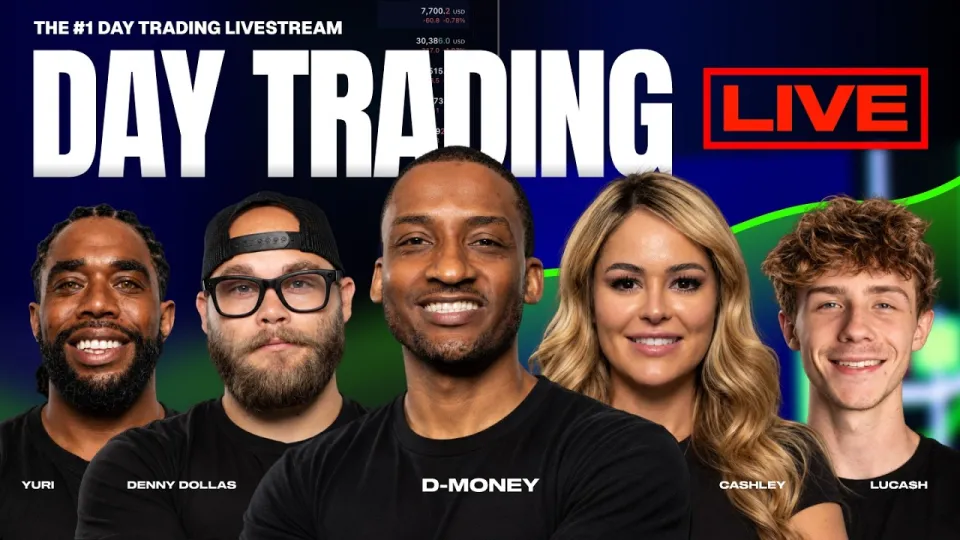
Video: LIVE DayTrading! #1 Watched Futures Trading Show!
Need articles like this for your video? They help promote it on YouTube and Google — order them in the Telegram bot @sat_sit_bot. Articles with your video embedded are written and posted by the bot itself — on popular topical sites (no ads). Try it free: 50 articles on us.
· based on the channel Patrick Wieland
Key takeaways
- Live day trading streams broadcast real entries, exits and stop placements in real time, unlike pre-recorded strategy videos.
- The BDH show runs every trading day from South Florida and California with hosts Patrick Wieland, Damareous Young, Lucas Kennard and Denny Jones.
- Prop firm rankings on the stream put Lucid Trading, TakeProfitTrader and Apex Trader Funding in the top three spots.
- A two-hour course teaching Patrick Wieland's strategy is sold for $99 through onlypropfirms.com.
- Prop firm accounts are evaluation products: you pay a fee, must hit a profit target without breaching a daily loss limit, then trade the firm's capital.
Live futures day trading is a format where a trader streams real-time order flow, entries, exits and stop placements on instruments like the E-mini S&P 500 (ES) or Nasdaq (NQ) while viewers watch the account react minute by minute. It differs from recorded tutorials because the outcome is unknown when the session starts, so what you see is execution under uncertainty rather than a curated example. The most-watched version of this format is Patrick Wieland's BDH show, streamed every trading day from trading floors in South Florida and California.
What makes a live futures trading show different from a recorded course
A recorded course shows you a setup that already worked; a live stream shows you the decision before the result. That difference matters more than any indicator setting, because most retail losses come from execution and psychology, not from a lack of chart patterns.
On a live futures stream you can observe:
- Where the trader actually places a stop, and how that stop changes when the market moves against the position.
- How position size is chosen relative to the account and the distance to the stop.
- What happens after a losing trade: whether the next entry is smaller, delayed or skipped entirely.
- Whether the trader follows the same rules on a slow day as on a trending day.
A recorded video can be re-shot, trimmed or simply not published if the day went badly. A live session cannot. That is the entire value proposition, and it is also the reason live streams are long, repetitive and often boring — most of a trading day is waiting, not clicking.
The BDH format and who is on the stream
The BDH show is built as a trading desk rather than a solo broadcast, with four named participants covering futures, prop firm accounts and market commentary. Patrick Wieland trades under the handles PW and Daddy Warbux; the rest of the crew is Damareous Young (DMoney), Lucas Kennard (Lucashhh) and Denny Jones (Denny Dollas).
The recurring segments follow a predictable structure:
- Real-time futures trading on index contracts, with entries called out as they happen.
- Market analysis and levels for the session ahead.
- Prop firm reviews and discount codes, promoted through the OnlyPropFirms comparison site.
- Giveaways and audience Q&A, which is where most of the practical questions actually get answered.
The show describes itself as the home of the number one futures day trader on YouTube, which is a marketing claim rather than a verified ranking — worth remembering when you evaluate anything said on stream.
Prop firm rankings and what they mean for a new trader
The stream publishes a top-eight prop firm list, and the ordering is the part most viewers copy first. The ranking shown is:
- Lucid Trading
- TakeProfitTrader
- Apex Trader Funding
- Tradeify
- Legends Trading
- BluSky Trading
- TradeDay
- MyFundedFutures
A ranking like this is a starting point, not a recommendation. Prop firms are evaluation businesses: you pay a monthly or one-time fee for a simulated account, you must reach a profit target without breaching a daily loss limit or a trailing drawdown, and only then do you receive a funded account with a profit split. The rules differ sharply between firms — some use end-of-day drawdown, some trail intraday; some allow news trading, some ban it. Two firms can sit next to each other on a list and be completely different products.
Before buying any evaluation, check three numbers: the profit target, the maximum daily loss, and whether the drawdown trails your unrealized peak or resets daily. Those three values decide whether a strategy is even viable on that account.
Copy trading, signals and the questions viewers keep asking
The two questions that dominate the chat on live futures streams are which setup is being traded and where that setup can be bought. Both point at the same underlying assumption: that the edge lives in a configuration of indicators rather than in risk management and repetition.
On the second question, the answer is concrete. Patrick Wieland sells a two-hour course for $99 through onlypropfirms.com that covers the strategy he trades on stream. Whether that is worth the money depends entirely on what you expect from it — a two-hour course can teach a framework, it cannot transfer screen time or discipline.
On copy trading specifically, three practical warnings apply:
- Copy trading a futures stream means your fills will differ from the streamer's, because your latency, platform and account size are not the same.
- A streamer can be down for the month while individual trades look impressive in isolation; without the full P&L you are judging a highlight reel.
- Prop firm rules apply to you, not to the person you copy, so a copied trade can breach your daily loss limit even if it is profitable for them.
How to watch a live trading stream without losing money on it
Watching a stream is only useful if you convert it into a checklist you can test on a demo account. Passive viewing produces the illusion of learning; structured note-taking produces data.
A workable routine for a session:
- Before the stream starts, mark your own levels on ES or NQ so you have an independent reference point.
- During the session, log every entry the trader takes with the reason, the stop distance and the outcome — including the losers.
- After the session, count how many trades followed the stated rules and how many were discretionary.
- Replay the same setup on your own demo account for at least twenty instances before risking real capital.
This turns a four-hour broadcast into a dataset. It also exposes the honest ratio of waiting to trading, which is usually far higher than beginners expect.
The risk side that entertainment streams underplay
Futures are leveraged instruments, and a single contract of ES moves $50 per point while NQ moves $20 per point. That means a twenty-point move against a one-contract NQ position is a $400 loss, which is why daily loss limits exist and why they are the first rule to respect.
Three things to keep separate when you watch any live trading show:
- Educational content versus promotional content. Affiliate links and discount codes are how the channel is funded; that does not make the information wrong, but it does mean the framing is not neutral.
- A streamer's results versus your results. Account size, risk tolerance and available hours differ, and none of them travel through a screen.
- Entertainment versus a trading plan. A show can be genuinely useful and still be a poor substitute for your own written rules.
Past performance on stream never guarantees future results, and no live session replaces your own research.
What a realistic takeaway looks like
Live futures day trading shows are best treated as a free window into execution, not as a signal service. The BDH stream, hosted by Patrick Wieland with Damareous Young, Lucas Kennard and Denny Jones, offers a daily look at real-time futures trading, prop firm comparisons and audience Q&A, plus a $99 course for those who want the framework behind the trades. Use it to study how stops, sizing and discipline are handled when the outcome is unknown, and use the prop firm list as a research starting point rather than a verdict. Then test everything on a demo account long enough to know whether the approach fits your capital and your temperament. The channel is a source of material, not a shortcut.
Questions & answers
What setup is being traded on live futures streams?
Most live futures streams trade intraday setups on index contracts such as ES and NQ, built around a directional bias, a level to enter from and a defined stop. The specific rules vary by host, and some sell a paid course explaining them — Patrick Wieland's is a two-hour course for $99. The setup matters far less than how consistently the stop and position size are applied.
Can I copy trade a live futures stream profitably?
Copy trading a stream is possible but rarely matches the original results. Your fills, latency, platform and account size differ from the streamer's, and prop firm rules such as daily loss limits apply to your account only. Treat copied trades as practice data, not as a business model.
Are prop firm rankings trustworthy?
Rankings are useful for discovering firms but should never be the only input. Many are published alongside affiliate links, including the top-eight list shown on the BDH stream. Always verify the profit target, daily loss limit and drawdown type directly in the firm's own rules before paying for an evaluation.
How much time should I spend watching before trading live?
A reasonable benchmark is several weeks of structured viewing combined with at least twenty demo instances of the same setup. Passive watching creates familiarity without skill, so log entries, stops and outcomes during each session. Only move to real capital once your demo results follow your written rules.
Source: LIVE DayTrading! #1 Watched Futures Trading Show! · Markdown version